

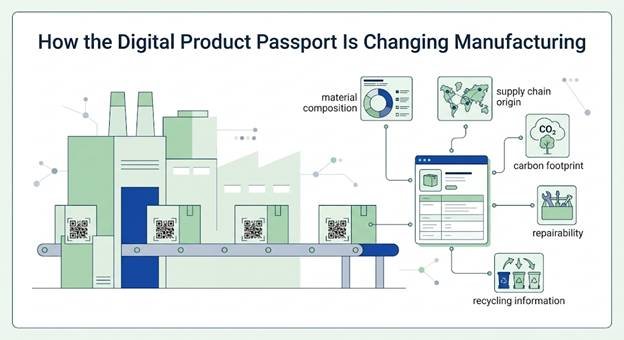
Manufacturing is entering a new phase where products are no longer defined only by their physical characteristics. Increasingly, every product must also carry structured information about its materials, origin, and lifecycle.
The European Union’s Digital Product Passport (DPP), introduced under the Ecodesign for Sustainable Products Regulation (ESPR), is accelerating this transformation. Instead of relying solely on traditional documentation and certifications, manufacturers will need to maintain digital records that describe products in far greater detail.
How the Digital Product Passpor…
For exporters selling into the European market, this shift changes not only compliance processes but also how products are designed, documented, and managed throughout their lifecycle.
A New Standard for Product Transparency
The Digital Product Passport is essentially a digital record linked to a product through a unique identifier, typically accessed through a QR code or similar technology. This digital record contains structured information describing the product’s lifecycle, from raw material sourcing to recycling.
Unlike traditional labels or documentation, the DPP is designed to be machine-readable and continuously updated, enabling regulators, businesses, and other stakeholders to access product data more easily.
Information included in a Digital Product Passport may cover several key areas.
Material Composition
Manufacturers will need to provide detailed information about the materials used in a product. This includes identifying primary materials as well as potentially hazardous substances that may affect recycling, safety, or environmental performance.
Traceability
The passport will also support traceability across the supply chain. Data about the origin of materials and components helps regulators and buyers verify product claims and ensure responsible sourcing practices.
Lifecycle Information
Another important component is lifecycle data. The passport may include information related to repairability, durability, spare part availability, and instructions for recycling or end-of-life processing.
Together, these elements create a much more comprehensive picture of a product than traditional documentation systems provide.
Why This Matters for Turkish Industry
Türkiye maintains strong trade relationships with the European Union, with many Turkish manufacturers exporting directly to EU markets. As Digital Product Passport requirements expand across sectors, compliance will increasingly become a prerequisite for market access.
Companies that cannot provide structured product data may face delays in certification processes or increased scrutiny from regulators and buyers.
At the same time, the transition toward digital product transparency also creates new opportunities for manufacturers that adapt early.
Stronger Supplier Collaboration
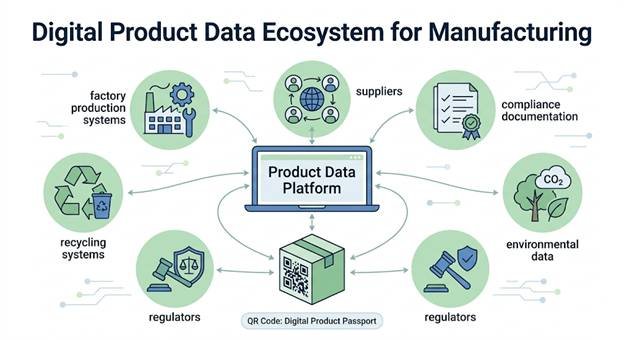
Implementing Digital Product Passport systems requires collecting data from suppliers at multiple stages of the production process. Standardizing how this information is collected can strengthen supplier relationships and improve supply chain transparency.
Better Product Design
When manufacturers integrate compliance considerations into product development, they often identify opportunities to improve durability, repairability, and recyclability. These improvements support both regulatory requirements and broader sustainability goals.
Greater Operational Resilience
Companies that shift from fragmented documentation systems to structured digital product data are often better prepared for future regulatory developments. Digital systems allow product information to be updated quickly and shared across multiple stakeholders.
The Evolution of Manufacturing Practices
The introduction of the Digital Product Passport reflects a broader evolution in manufacturing practices.
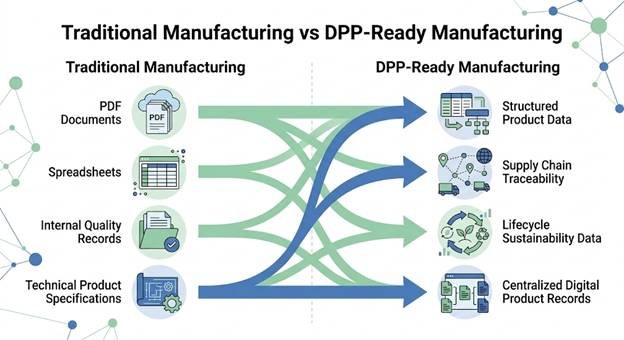
Traditional systems often treat compliance documentation as a separate administrative task. Files are created, stored, and submitted to regulators when necessary. However, product information is rarely integrated across departments or supply chain partners.
Digital Product Passports move the industry toward a more integrated approach where product data becomes part of the manufacturing process itself.
| Feature | Traditional Manufacturing | DPP-Ready Manufacturing |
| Data Format | Static PDFs and spreadsheets | Structured, machine-readable data |
| Traceability | Internal quality records | Supply chain transparency |
| Design Focus | Technical specifications | Lifecycle and sustainability |
| Documentation | Fragmented internal files | Centralized digital records |
This shift reflects the growing importance of data as a core component of manufacturing systems.
Preparing for the Transition
Although the implementation timeline varies by product category, manufacturers should begin preparing for the Digital Product Passport now.
Several steps can support this transition.
First, companies can review their current product data systems and identify where key information is stored. Many organizations discover that product data exists across multiple departments, often in inconsistent formats.
Second, manufacturers can begin mapping supplier data requirements. Understanding what information is needed from suppliers helps identify potential gaps early.
Finally, companies may evaluate whether their current systems can support structured product data or whether new digital tools are required.
Preparing early allows manufacturers to adapt gradually rather than responding under regulatory pressure later.
Looking Ahead
The Digital Product Passport signals a broader transformation in how products are managed, regulated, and understood. Instead of static documentation, regulators and markets are increasingly expecting dynamic digital product information.
For manufacturers exporting to the European Union, adapting to this model will be essential for maintaining competitiveness and market access.
At the same time, companies that embrace digital product transparency can position themselves ahead of future regulatory changes while strengthening their supply chains and improving product design.
TurkPass is building infrastructure designed to help manufacturers and exporters manage Digital Product Passport requirements and navigate the growing demand for product-level transparency across global supply chains.