

Introduction: SMEs at the Heart of Türkiye’s Export Economy
Small and medium-sized enterprises (SMEs) form the backbone of Türkiye’s manufacturing and export ecosystem. Across industries such as textiles, automotive components, machinery, electronics, and home appliances, thousands of SMEs contribute to production networks that supply European markets.
Many of these companies operate as suppliers to larger exporters or international brands. Others sell finished products directly to distributors and retailers in the European Union. In either case, Turkish SMEs are deeply embedded in cross-border supply chains that connect local manufacturing with European demand.
As the European Union introduces new sustainability and transparency regulations, these supply chains are beginning to evolve. One of the most significant developments is the Digital Product Passport (DPP) framework, which aims to make product information more accessible, traceable, and standardized across a product’s lifecycle.
While the full regulatory rollout will take place gradually, many SMEs exporting to the EU may eventually need to adapt their processes to meet new expectations around product data, documentation, and supply-chain transparency.
Understanding the Digital Product Passport
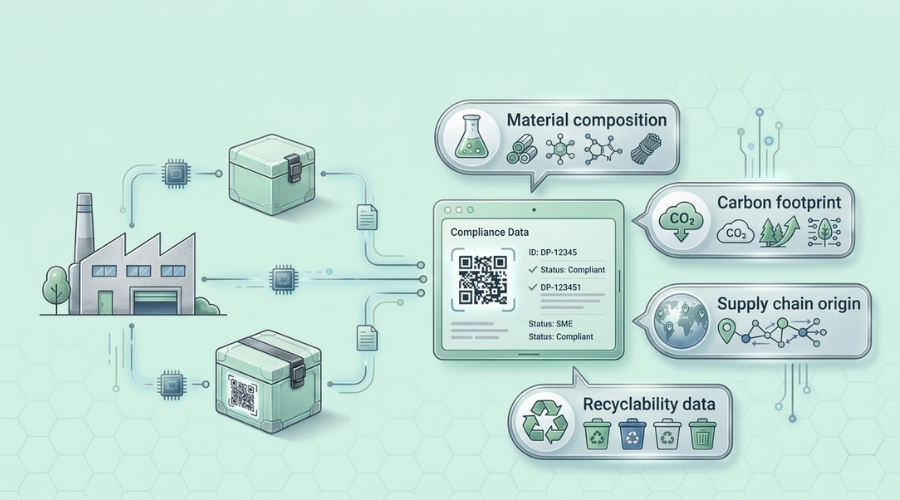
The Digital Product Passport is being introduced under the EU’s Ecodesign for Sustainable Products Regulation (ESPR). The concept aims to create a digital record that contains structured information about a product and makes that information accessible across the supply chain.
Instead of relying solely on traditional documentation—such as technical files, certificates, or supplier declarations—the Digital Product Passport provides a structured digital profile for products.
Depending on the product category, the passport may include information such as:
· material composition
· component origins
· environmental impact metrics
· carbon footprint data
· durability and repairability indicators
· recycling or end-of-life guidance
· compliance documentation
In practice, this means product-related data may need to be stored in standardized digital formats and shared between manufacturers, suppliers, regulators, and other stakeholders.
For large enterprises with established compliance teams and digital systems, adapting to these requirements may be relatively manageable. For SMEs, however, the transition could present several operational challenges.
Operational Challenges for SMEs
One of the first difficulties SMEs may encounter relates to internal processes and operational workflows.
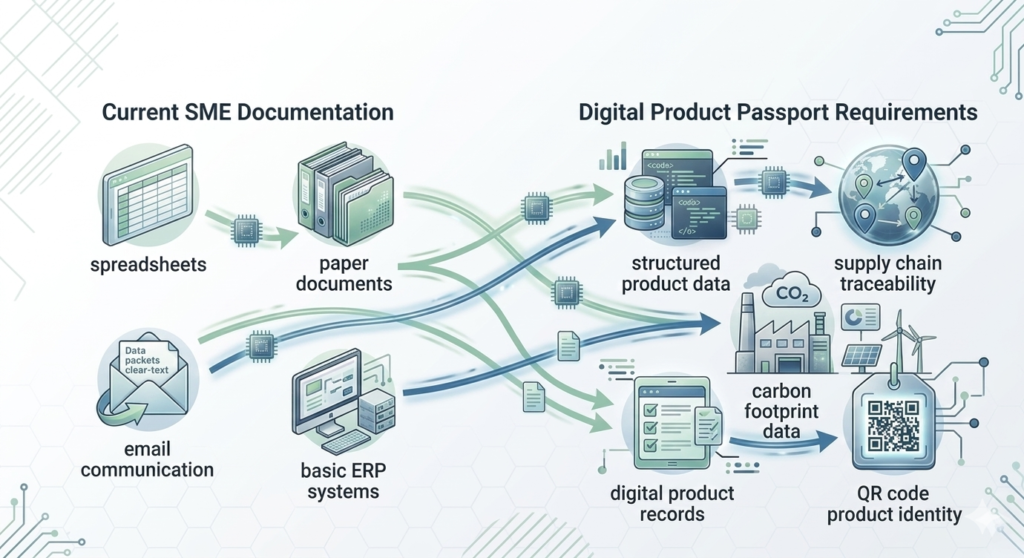
Many small manufacturers manage production documentation through a combination of spreadsheets, ERP systems, supplier emails, and paper-based records. These systems often work effectively for day-to-day operations, but they may not be designed to support the level of traceability expected under emerging transparency regulations.
For example, a textile producer or component manufacturer may know their immediate suppliers but may not systematically record the origin of every raw material or component used in production.
Digital Product Passport requirements may push companies to rethink how product information is collected, stored, and maintained throughout the production lifecycle.
This may involve changes such as:
· standardizing product data structures
· establishing consistent documentation processes
· tracking supplier information more systematically
· maintaining digital records for each product model or batch
For SMEs operating with lean teams and limited administrative capacity, implementing such processes may require significant adjustments.
Data and Documentation Challenges
Another major issue is the availability and reliability of product data.
Many SMEs depend on suppliers for critical information about materials, components, and environmental performance. However, this information is not always available in structured or verifiable formats.
For instance, a manufacturer may purchase fabrics, metal parts, or electronic components from multiple suppliers. While technical specifications are typically provided, detailed sustainability data—such as emissions information, recyclability indicators, or lifecycle metrics—may not always be included.
As Digital Product Passport frameworks evolve, companies may need to collect and verify more detailed product data.
This can create new documentation challenges, including:
· gathering consistent information from multiple suppliers
· validating the accuracy of sustainability data
· updating documentation when materials or suppliers change
· ensuring that product information remains consistent across export markets
For SMEs operating in complex supply networks, coordinating these data flows may become one of the most demanding aspects of DPP preparation.
Supply Chain Transparency Requirements
Digital Product Passports are closely connected to broader EU initiatives aimed at improving supply-chain transparency.
European regulators increasingly seek greater visibility into where products originate, how they are manufactured, and what materials they contain. This visibility is seen as an important step toward enabling circular-economy practices and reducing environmental impact.
For SMEs, this could mean that transparency requirements extend beyond their immediate operations.
Manufacturers may eventually need to document information such as:
· the origin of raw materials
· environmental characteristics of components
· supplier certifications or compliance records
· manufacturing processes used in production
In practice, these requirements may extend across multiple tiers of suppliers. SMEs relying on fragmented supplier networks may therefore need to strengthen communication and data exchange with upstream partners.
Technology and Resource Limitations
One of the most practical barriers SMEs face is the gap between regulatory expectations and existing technological infrastructure.
Large companies often operate advanced digital systems for product lifecycle management, compliance tracking, and supplier integration. SMEs, by contrast, may rely on simpler tools that are not designed for structured product data management.
Adapting to Digital Product Passport requirements may require investments in areas such as:
· data management systems
· product lifecycle tracking tools
· supplier information platforms
· digital documentation workflows
For smaller manufacturers, these investments may compete with other priorities such as equipment upgrades, workforce expansion, or production capacity.
In addition to technology, there is also the issue of internal expertise. Understanding evolving EU regulations and translating them into operational processes requires knowledge that many SMEs may not yet have within their organizations.
The Importance of Early Preparation and Collaboration
Despite these challenges, early preparation can significantly reduce future compliance pressure.
Companies that begin reviewing their product data structures, supplier documentation, and internal processes today may find it easier to adapt as regulatory frameworks become clearer.
Collaboration will also be important.
Industry associations, export organizations, technology providers, and regulatory advisors can help SMEs interpret emerging requirements and identify practical solutions.
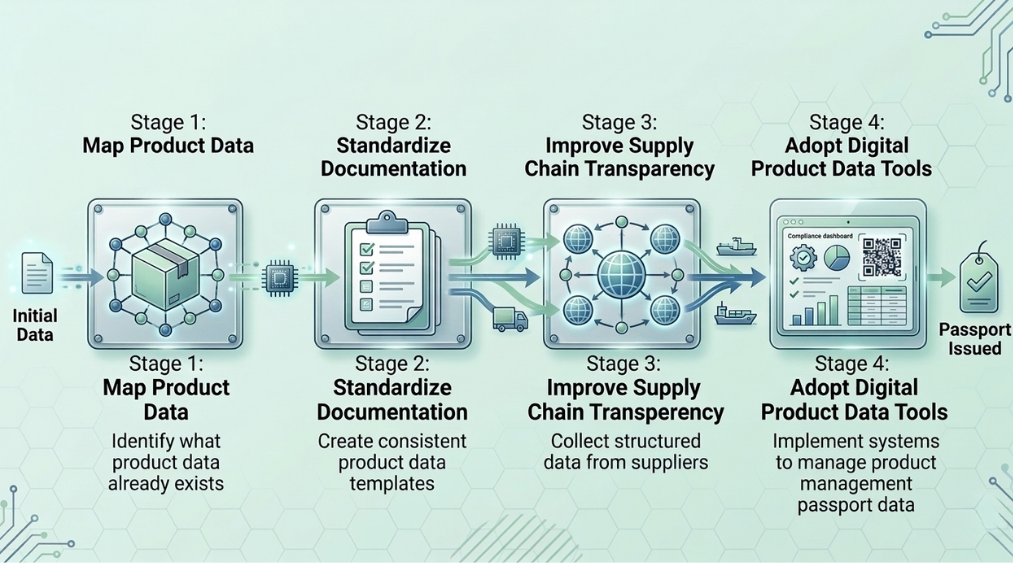
In many cases, preparation does not require immediate large-scale transformation. Instead, companies can begin with smaller steps such as:
· mapping existing product data and documentation
· reviewing supplier information flows
· identifying gaps in traceability or documentation
· exploring digital tools for managing product data
These incremental improvements can help companies gradually build the capabilities needed to operate in a more transparent regulatory environment.
Conclusion
The Digital Product Passport represents a significant shift in how product information may be managed and shared across global supply chains.
For Turkish SMEs exporting to the European Union, the transition may introduce new expectations around product data, documentation, and supply-chain transparency.
Adapting to these requirements will not always be straightforward. Operational processes, supplier relationships, data availability, and technology infrastructure may all need to evolve as transparency regulations expand.
However, SMEs that begin preparing early—by improving documentation practices, strengthening supplier data flows, and exploring digital solutions—may be better positioned to navigate these changes.
TurkPass is developing infrastructure designed to help manufacturers and exporters prepare for Digital Product Passport compliance and increasing product transparency requirements in EU trade.