

Introduction
The Digital Product Passport (DPP) is one of the most important transparency tools emerging from the European Union’s sustainability policy framework. However, the DPP will not appear overnight as a single “go-live” requirement.
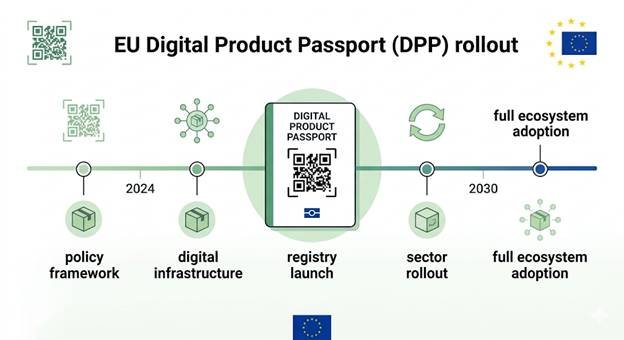
Instead, it is being introduced gradually through a structured regulatory timeline that extends from 2024 to 2030 and beyond.
For manufacturers and exporters selling products into the European Union—including many companies in Türkiye—understanding this timeline is critical. Compliance planning depends not only on what the DPP is, but also when specific sectors will be affected.
The Digital Product Passport is being implemented under the Ecodesign for Sustainable Products Regulation (ESPR), which entered into force in July 2024. Through this regulation, the EU is moving away from traditional document-based compliance toward structured, machine-readable product data that can be shared across supply chains.
This transition will affect manufacturers, importers, retailers, recyclers, and regulators across multiple industries.
Phase 1: Building the Digital Infrastructure (2024–2026)
Before the first Digital Product Passports are widely required, the EU is establishing the digital infrastructure needed to manage and verify product data.
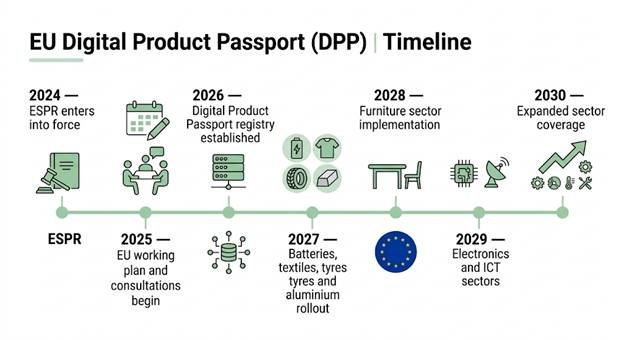
July 2024 — ESPR enters into force
The Ecodesign for Sustainable Products Regulation became legally effective on 18 July 2024. This regulation provides the legal framework that enables the EU to introduce product sustainability requirements and Digital Product Passports across many product categories.
The regulation also establishes governance mechanisms, working plans, and delegated powers that allow the European Commission to activate product-specific requirements over time.
2025 — Policy planning and consultation
During 2025, the European Commission began preparing the first implementation steps.
Key developments included:
- Launch of the Ecodesign Forum, bringing together Member States and industry stakeholders.
- Publication of the 2025–2030 ESPR Working Plan, which identifies priority product groups for future regulation.
- Public consultations on the design of the Digital Product Passport system, including how product data should be stored, accessed, and managed.
These steps marked the transition from policy concept to operational planning.
July 19, 2026 — Digital Product Passport Registry
One of the most important infrastructure milestones occurs in July 2026.
By 19 July 2026, the European Commission must establish the Digital Product Passport Registry.
This registry will store key identifiers associated with Digital Product Passports and allow authorities to verify product information electronically.
Once operational, the registry will support:
- customs verification
- market surveillance
- product traceability across supply chains
For exporters, this means that product identification and digital records may become part of border compliance processes.
Phase 2: Sector Activation Through Delegated Acts
Unlike traditional regulations that apply to all products at once, the Digital Product Passport will be activated sector by sector.
This happens through legal instruments known as delegated acts.
Each delegated act defines:
- which product group is covered
- what information must be included in the passport
- who must provide the data
- when compliance becomes mandatory
Once a delegated act enters into force, companies typically receive a minimum transition period of 18 months before the rules become enforceable.
Indicative Sector Rollout Timeline
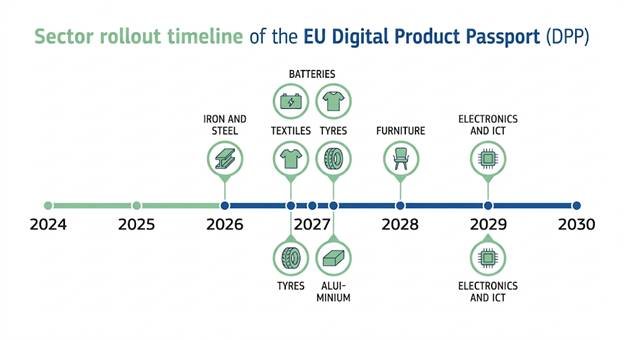
Based on the European Commission’s 2025–2030 Working Plan, the following sectors are expected to be regulated first.
Batteries
Batteries are the most advanced example of Digital Product Passport implementation.
Under the EU Batteries Regulation, certain battery categories—including electric-vehicle batteries and large industrial batteries—must have a battery passport starting on 18 February 2027.
This passport will contain information about:
- material composition
- carbon footprint
- recycling information
- battery performance and lifecycle data
Iron and Steel
Iron and steel are expected to be among the first intermediate products covered under ESPR measures, with regulatory adoption anticipated around 2026.
Because these materials are used across many manufacturing sectors, related data requirements may affect multiple downstream industries.
Textiles and Apparel
Textiles are identified as a priority sector within the EU’s Sustainable Textiles Strategy.
Digital Product Passports in this sector are expected to support circular-economy goals by providing information about:
- fiber composition
- durability
- repairability
- recyclability
Delegated acts affecting textiles are expected around 2027.
Aluminium and Tyres
Additional product groups expected to see regulatory adoption around 2027 include:
- aluminium
- tyres
Both sectors are closely linked to environmental impact and circular-economy policy objectives.
Furniture
Furniture products are currently expected to see regulatory measures around 2028, reflecting the sector’s significant material use and long product lifecycles.
Electronics and ICT Products
Electronics and information-technology products are expected to be affected later in the rollout, with regulatory measures anticipated around 2029.
Digital Product Passports in this sector may include data related to:
- component materials
- repairability
- recyclability
- hazardous substances
Why the 18-Month Rule Is Shorter Than It Appears
At first glance, the minimum 18-month transition period between regulation and enforcement may seem generous.
In practice, however, preparing for Digital Product Passport compliance can take significantly longer.
Companies must often complete several complex tasks before they can generate compliant product passports.
These tasks may include:
Supply-chain data collection
Manufacturers must gather information about materials, suppliers, and environmental impacts across multiple tiers of their supply chains.
Internal data governance
Organizations need systems capable of managing structured product data and generating digital passport records.
Collaboration with EU importers
Exporters must ensure that importers and distributors in the EU can access technical documentation and product information required by regulators.
For companies with complex global supply chains, building these capabilities can take years rather than months.
What Exporters Should Monitor
For compliance and regulatory teams, several milestones are particularly important to watch.
Digital Product Passport registry launch (2026)
This marks the first operational infrastructure required for DPP implementation.
Publication of sector-specific delegated acts
Once a delegated act is published, the compliance timeline effectively begins.
Customs integration
Future border procedures may allow customs authorities to verify Digital Product Passport identifiers electronically.
Technical standards and governance rules
Decisions about data standards, certification systems, and service providers will influence how companies implement DPP systems.
Strategic Implications for Exporters
The Digital Product Passport should be understood as a long-term regulatory transformation, not a single compliance requirement.
For exporters selling into the EU, the practical implication is clear:
Product-level sustainability data will increasingly become a condition for market access.
Companies that begin preparing early can:
- map their supply-chain data requirements
- identify information gaps
- build digital infrastructure gradually
- align suppliers before regulations become mandatory
Waiting until sector rules are finalized may create operational challenges once compliance deadlines approach.